Filozofija kao sistem?
Rare book

Filozofija kao sistem?

Branko Despot

"Philosophy as a System?" (1999) is a collection of four philosophical lectures by Croatian philosopher Branko Despot (b. 1942), known for his profound interpretations of classical German philosophy and metaphysics.

The book examines the possibility and limits of philosophy as a system (systematic thinking) through a critical analysis of three key philosophers:

  • René Descartes – as the founder of modern systematic thinking (cogito ergo sum, method of doubt, mathematical ideal of clarity and resolution).
  • Georg Wilhelm Friedrich Hegel – the pinnacle of systematic idealism (absolute spirit, dialectics, encyclopedic system of philosophy).
  • Nicolai Hartmann – critique of systematicity in modern ontology (realistic ontology, layers of being, rejection of the closed system).

Despot neither defends nor rejects systematicity absolutely – he asks: can philosophy be a system without losing its essence (openness to being, question, transcendence)? The analysis is critical, but deeply respectful of tradition, with an emphasis on the limits of a rational system and the need for a non-systematic, existential or ontological approach.

The style is brachiological, academic, but accessible – typical of Despot: self-contained and with a focus on the essential problems of metaphysics. The book is part of his opus on the absolute, freedom and the limits of philosophy (cf. "The Scope of the Absolute", "Philosophy?").

Editor
Pavo Barišić
Graphics design
Zoran pavlović
Dimensions
20.5 x 12.5 cm
Pages
118
Publisher
Hrvatsko filozofsko društvo, Zagreb, 1999.
 
Latin alphabet. Paperback.
Language: Croatian.

One copy is available

Condition:Unused
 

Are you interested in another book? You can search the offer using our search engine or browse books by category.

You may also be interested in these titles

Foucault

Foucault

Gilles Deleuze

Deleuze's Portrait of Foucault (1986) is not a monograph, but a creative "thinking with Foucault." It analyzes the archaeology of knowledge, introducing the concepts of archive, power, subjectification, and "fold" as crucial to Foucault's thought on knowl

Sandorf, 2023.
Croatian. Latin alphabet. Paperback.
11.86
Nietzsche: Biografija njegove misli

Nietzsche: Biografija njegove misli

Rüdiger Safranski

Rüdiger Safranski, known for his works on Schopenhauer, Heidegger, and Goethe, presents an intimate "biography of thought" of Friedrich Nietzsche. The study traces the evolution of his ideas through key events, contradictions, and creative crises.

Sandorf, 2021.
Croatian. Latin alphabet. Hardcover with dust jacket.
25.62
Mistika

Mistika

Louis Gardet

The book deals with an in-depth analysis of mystical experiences in different religious traditions, with an emphasis on Christianity and Islam. Gardet, a French theologian and orientalist, explores mysticism as a universal phenomenon that transcends cultu

Kršćanska sadašnjost, 1983.
Croatian. Latin alphabet. Paperback.
7.32
Rajski brežuljci: Povijest moći i nemoći

Rajski brežuljci: Povijest moći i nemoći

Mineke Schipper

In her book, Mineke Schipper explores cultures throughout history to describe the complex relationship men have with the female body. Despite the symbiotic relationship between the sexes, men have always had greater power than women, and at the root of it

Durieux, 2021.
Croatian. Latin alphabet. Hardcover with dust jacket.
16.54
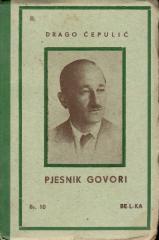
Pjesnik govori: filozofsko-estetske kozerije

Pjesnik govori: filozofsko-estetske kozerije

Drago Ćepulić

"The Poet Speaks: Philosophical-Aesthetic Riddles" by Dragutin (Drago) Ćepulić is a collection of short, thoughtful essays in which the author reflects on literature, art, philosophy, and human creativity in a witty, insightful, and unobtrusive manner.

Minerva nakladna knjižara, 1943.
Croatian. Latin alphabet. Paperback.
6.24
Filozofija i smrt

Filozofija i smrt

Maja Milčinski

This work, along with various themes and problems of the Asian philosophical and religious schools, tries to show the acceptance of death as a part of life. The tradition of a cultivated relationship with death acts as a medicine and enables a positive re

CID-NOVA, 2008.
Croatian. Latin alphabet. Paperback.
7.42