Sakupljač svjetova
Rare book

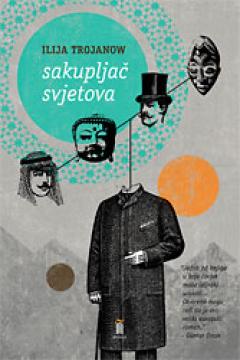
Sakupljač svjetova

Ilija Trojanow

A romanticized biography of British adventurer Sir Richard Francis Burton. Three great journeys (India, the Hajj to Mecca, Africa, and the search for the source of the Nile) told from the perspectives of his Indian, Arab, and African companions/guides.

The Collector of Worlds (2006) by Ilija Trojanow (Bulgarian-born, born 1965, nomadic writer) is an award-winning historical novel inspired by the life of Sir Richard Francis Burton (1821–1890), the legendary British explorer, polyglot, spy, translator of One Thousand and One Nights and erotic works.

The novel is not a classic biography, but a polyphonic account in three main parts: each focusing on one of Burton's key journeys, told from the perspective of his "native" companions and guides.

  • Part One: India in the 1840s – Burton in a British army uniform, but disguised as a Muslim, learns languages, customs, absorbs culture; the narrator is an Indian servant or friend who sees his ambivalence.
  • Part Two: The Hajj to Mecca in 1853 – Burton disguises himself as an Afghan pilgrim, risking his life to enter the forbidden city; the narrator is an Arab guide who witnesses his courage and obsession.
  • Part Three: Africa in the 1850s – an expedition with John Hanning Speke in search of the sources of the Nile; conflicts, disease, rivalry; the narrator is an African porter or companion who sees Burton as a stranger who "collects worlds" but never fully understands them.

Trojanow uses oriental storytelling traditions – stories within stories, fantasies, polyphony – to show the clash of East and West, colonial perspective and cultural appropriation. Burton is portrayed as an eccentric: a brilliant polyglot and adventurer who crosses borders, but also a colonizer who "collects" cultures like trophies. The novel is rich in detail, linguistically opulent, with deep insights into identity, disguise, and imperialism.

Original title
Der Weltensammler
Translation
Sabine Marić
Editor
Petra Sapun
Graphics design
Marko Jovanovac
Dimensions
21 x 14 cm
Pages
461
Publisher
Novela media, Zagreb, 2010.
 
Latin alphabet. Paperback.
Language: Croatian.

One copy is available

Condition:Used, excellent condition
 

Are you interested in another book? You can search the offer using our search engine or browse books by category.

You may also be interested in these titles

Napoleon i grofica Walewska

Napoleon i grofica Walewska

Gertrude Aretz

"Napoleon and Countess Walewska" by Gertrude Aretz is a historical biographical novel that explores the passionate and intriguing relationship between the French Emperor Napoleon Bonaparte and his Polish mistress, Countess Marie Walewska.

Binoza, 1938.
Croatian. Latin alphabet. Hardcover with dust jacket.
34.26
Sanjaj nemogući san

Sanjaj nemogući san

Johannes Mario Simmel

From the bestselling author of "Jimmy and the Rainbow," comes a novel that weaves a love story with the stirring events of the Bosnian war. This story, woven into the historical context, reminds us that sometimes the impossible dream is the only one worth

Mozaik knjiga, 1997.
Croatian. Latin alphabet. Hardcover.
7.425.94
Dedalova kuća

Dedalova kuća

Kai Meyer

An exciting story intended for fans of crime novels with themes from the history of art.

Mozaik knjiga, 2000.
Croatian. Latin alphabet. Paperback.
5.42
Pljačkaši prirode

Pljačkaši prirode

Thomas Daring

A book by Thomas Daring (pseud. of Anton Zischka) that focuses on the subject of colonial exploitation of natural resources during the 19th and 20th centuries. Very rarely offered with a beautifully preserved cover.

Binoza, 1939.
Croatian. Latin alphabet. Hardcover with dust jacket.
23.48
Golem

Golem

Isaac Bashevis Singer

"The Golem" is a novel by Nobel Prize winner Isaac Bashevis Singer, which presents a traditional story of the golem from Jewish folklore. The work was first published in Yiddish in 1969, and the author himself translated the novel into English in 1982.

Narodna knjiga, 1995.
Serbian. Cyrillic alphabet. Paperback.
3.52
I ne reče ni reči

I ne reče ni reči

Heinrich Böll

In Boll's novels, one of the central themes is the attempt to preserve basic moral values ​​in a time of terror, as well as in a period of material prosperity and corruption.

Svjetlost, 1965.
Serbian. Latin alphabet. Paperback.
3.22 - 3.98