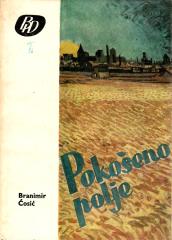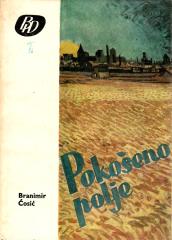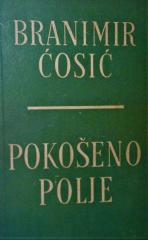
Pokošeno polje
Mown Fields (1933) represents the culmination and swan song of a life that ended too soon – the author finished the novel just five months before his death from tuberculosis, at the age of thirty-one.
A book deeply imbued with personal pain and a broad picture of a broken time, where war trauma and post-war decadence intertwine into a difficult, inevitable whole. The first part of the novel bears a strong autobiographical imprint: through the eyes of a child and a young man, the horrors of World War I are brought to life – hunger, occupation, a devastated village, the loss of family and innocence. It is a world in which youth is mown down like a field under a mower, where national pride mixes with humiliation, and everyday life becomes a struggle for bare survival. Ćosić does not romanticize suffering; it is raw, tangible, leaving deep scars that never heal.
The second part shifts to Belgrade in the interwar years – a city of corruption, false ideals, moral collapse and existential emptiness. The main character, a journalist and intellectual, wanders through a gallery of failed characters: cynics, opportunists, petty bourgeois who have adapted to the new order. Ćosić’s criticism is harsh, but not pamphlet-like – it comes from within, from the disappointment of a generation that survived the war to witness the disintegration of all the values it fought for. Love, friendship, faith in a better tomorrow – everything crumbles under the weight of time.
The style of the novel is urban, modern, psychologically profound, with a fragmentary flow that reflects inner unrest. There is no pathos, no embellishment; Ćosić writes with bare, almost documentary precision, but with warmth towards the disenfranchised and wounded. The title – a mowed field – is not just a metaphor for destroyed youth; it is an image of an entire era, where life is mowed before it blooms.
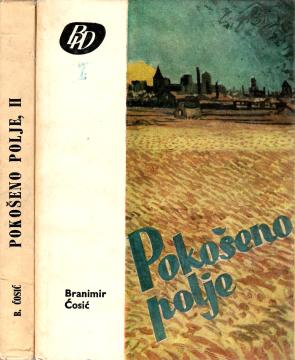
The book consists of two volumes.
Jedan višetomni primjerak je u ponudi.