Ontologija
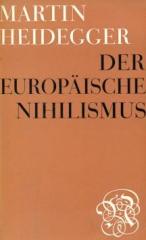
Der europäische Nihilismus

„Der europäische Nihilismus“ ist eine Sammlung von Heideggers Vorlesungen und Notizen aus den 1930er und 1940er Jahren, in denen er die Entstehung und Bedeutung des Nihilismus in Europa analysiert.
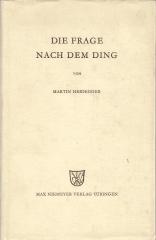
Die Frage nach dem Ding
„Die Frage der Dinge“, eine Sammlung von Vorlesungen, die Heidegger 1935/36 hielt, behandelt die grundlegende philosophische Frage: Was ist los? Sein Ausgangspunkt ist Kants Kritik der reinen Vernunft, doch Heidegger geht noch weiter und möchte die Natur
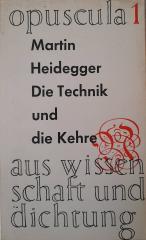
Die Technik und die Kehre
Technique and the Turn is a collection of essays published in 1954, one of Heidegger's key works on the problem of technique. Heidegger analyzes the essence of technique and warns that modern technology is not just a set of means, but has a deep ontologic
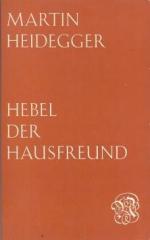
Hebel der Hausfreund
"Hebel – der Hausfreund" is based on a lecture given by Martin Heidegger in 1957, in which he reflects on the character and work of the German writer Johann Peter Hebel.

Izabrani filozofski spisi

The first comprehensive selection of Leibniz's philosophical works in the Croatian language. The selection does not include Theodicy and New Essays, as well as Leibniz's later scientific works.
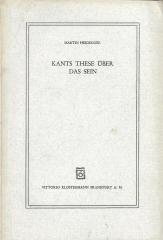
Kants these über das Sein
Kant's Thesis on Being, a lecture given by Martin Heidegger in 1930, focuses on an analysis of Kant's claim that Being is in fact a positing (Setzung) – that is, the act of positing or affirming through judgment.
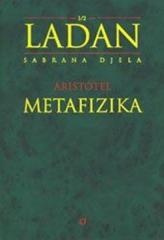
Metafizika

Metaphysics is Aristotle's most famous and influential philosophical work, consisting of 14 books. The name Metaphysics is not Aristotle's – it came later because the writings were placed "behind physics" (meta ta physika).
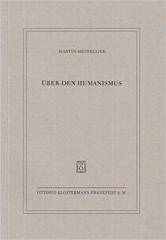
Über den Humanismus
In "Letter on Humanism" (1947), Martin Heidegger answers Jean Beaufret's question about the meaning of humanism, presenting a critical stance towards traditional humanism and offering a new understanding of human existence.
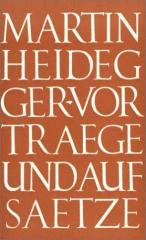
Vorträge und Aufsätze
Published in 1954, the collection brings together some of Heidegger's most important short texts from his middle and late period. In these texts, Heidegger develops key ideas about technology, art, language, and man's relationship to Being.
Filozofija
- Antička filozofija
- Egzistencijalizam
- Empirizam
- Estetika
- Etika
- Fenomenologija
- Filozofija duha
- Filozofija jezika
- Filozofija povijesti
- Filozofija prava
- Filozofija religije
- Filozofija umjetnosti
- Filozofija znanosti
- Filozofije istoka
- Filozofije XIX stoljeća
- Filozofije XX stoljeća
- Filozofska metodologija
- Filozofski eseji
- Hermeneutika
- Hrvatska filozofija
- Logika
- Marksizam
- Moralna filozofija
- Njemačka klasična filozofija
- Ontologija
- Politička filozofija
- Postmoderna
- Povijest filozofije
- Praktična filozofija
- Prosvjetiteljstvo
- Renesansa
- Spoznajna teorija
- Srednjevjekovna filozofija
- Suvremena filozofijia
- Uvod u filozofiju
Kategorije
- Alternativa
- Dječje knjige
- Društvene znanosti
- Enciklopedije, atlasi, leksikoni i rječnici
- Filozofija
- Glazba
- Književnost
- Kolekcionarstvo
- Nakladnički nizovi / Edicije
- Periodika
- Povijest
- Praktična knjiga
- Prirodne znanosti
- Publicistika
- Religija
- Rustične dekoracije
- Stripovi
- Tehnička knjiga
- Umjetnost
- Zavičajna knjiga
- Škola i udžbenici